Department of Justice Announces Update in Efforts to Ban Synthetic Kratom Derivatives
DEPARTMENT OF JUSTICE ANNOUNCES UPDATE IN EFFORTS TO BAN SYNTHETIC KRATOM DERIVATIVES

As the federal government takes a deeper look at the kratom industry, advocates for natural leaf kratom are fortifying a foothold in their fight to distinguish natural offerings from those that incorrectly label their products.
The Department of Justice (DOJ) recently announced a formal order to target a group of synthetic kratom derivatives. That action came after the Drug Enforcement Agency (DEA) announced its intent to target synthesized kratom byproducts in July, and more than a year after the Food and Drug Administration (FDA) made it clear that synthetically altered kratom derivatives presented a public health threat. Following years of pushing for prohibition, the shift in the federal government has cleared a path for natural leaf kratom products and properly shifted the regulatory spotlight onto "dangerous" synthetics that have falsely labeled their products as natural.
DOJ Takes Aim at Synthetic Adulterants
Attorney General Todd Blanche announced the emergency scheduling of "three potent opioid compounds" on Aug. 25 as part of the DOJ's efforts to offer oversight of the kratom industry. Those three compounds are mitragynine pseudoindoxyl (MGPI) and two synthetic compounds, MGM-15 and MGM-16. All three substances had been temporarily classified as Schedule I substances by the DEA.
Those efforts build on previously announced intentions by the DEA, in conjunction with the FDA, to temporarily schedule 7-hydroxymitragynine (7-OH), a trace alkaloid in kratom leaves, in Schedule I. Federal regulators initially announced plans to target 7-OH in July of 2025 before pursuing the temporary scheduling as of July 6, 2026.
The order to temporarily schedule the three compounds will remain in effect for two years, whereas the DOJ has not formally announced an order placing 7-OH in Schedule I.
DOJ's efforts to join the fight against synthesized derivatives of the kratom plant came in the wake of "preclinical evidence" indicating that the three substances trigger opioid receptors in the brain in a way that is detrimental to public health. The actions by the DEA are specifically "directed at deliberately manufactured and concentrated opioid products, not traditional botanical kratom."
That key distinction echoes what kratom advocates have been saying for years: Natural leaf kratom deserves a different designation from synthetically altered products masquerading as natural.
"The Justice Department is acting before these dangerous compounds become a broader threat," Blanche said. "These are potent opioids being manufactured and sold in consumer products, often under labels that obscure their true risks."
The actions taken at the federal level serve as a major boost for advocates and researchers who have been discussing the 'kratom question' for more than a decade. That includes the American Kratom Association (AKA), which has been instrumental in passing state-level regulations that have made a clear distinction between natural leaf kratom and those substances using that label to appeal to customers.
A key component in those legislative efforts has been limiting the amount of 7-OH that can be found in products labeled as kratom. Thanks to the emergency scheduling actions, state lawmakers now have a blueprint and a federally backed set of rules to help guide local authorities in crafting kratom regulations that favor natural leaf products.
Paving a Path for Safe, Natural Products
In a press release from the AKA, senior policy fellow Mac Haddow made it clear that the actions by the federal government will have positive ripple effects for the kratom industry.
"This action is a critically important step in protecting American consumers from dangerous chemically manipulated opioid products that never should have been marketed as kratom," Haddow said. "DEA and DOJ are properly targeting manufactured, concentrated, fortified, or intentionally added opioid compounds — not safely formulated natural kratom leaf products."
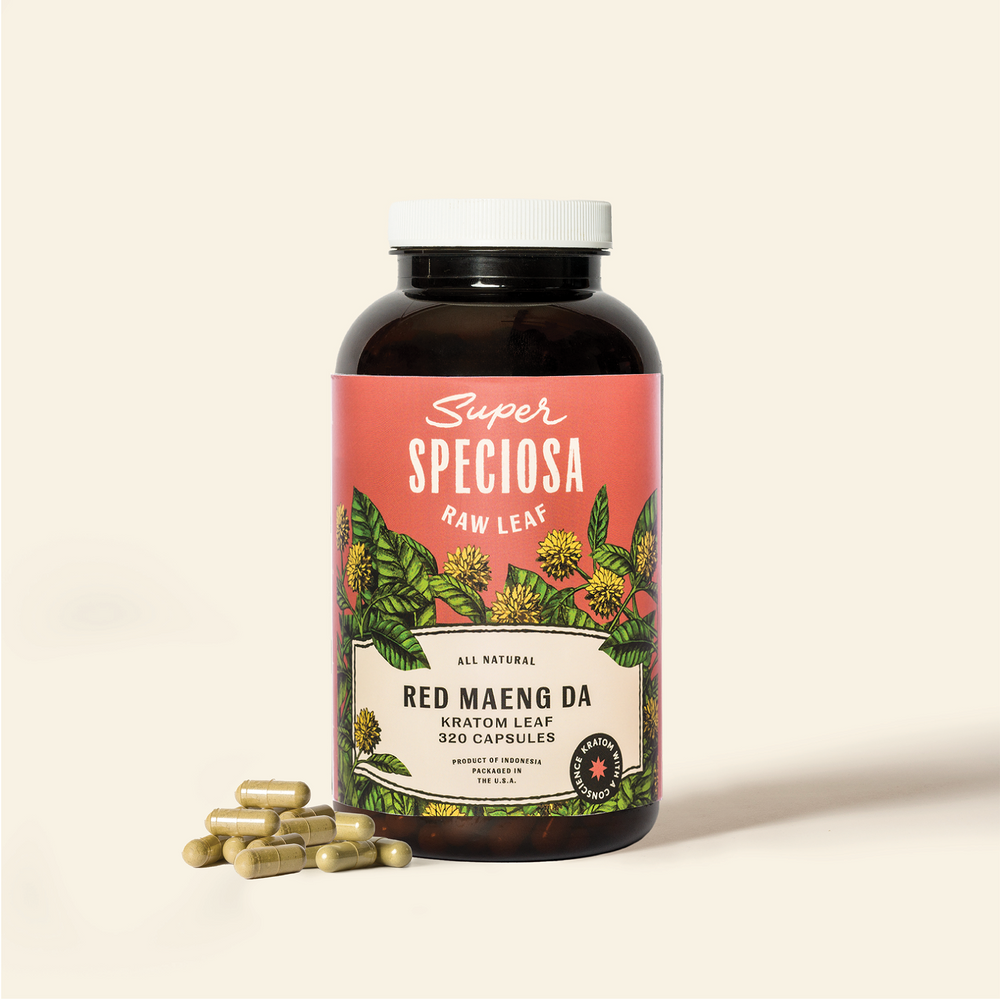
In addition to applauding the recent moves by the DEA and DOJ, the AKA's release highlighted that the actions taken by federal authorities will benefit responsible kratom producers. Super Speciosa is dedicated to offering high-quality, natural leaf kratom products that customers can trust, and the recent regulatory actions will allow consumers to have confidence in products that are marketed as kratom.
For years, the AKA and other industry advocates have testified at all levels of government about risks associated with 7-OH and other substances associated with synthesized alkaloids. With the recent actions taken by the DEA and DOJ, advocates finally have the federal government's backing to help keep customers safe from products masquerading as natural.
"This is exactly the kind of precision that consumer protection requires," Haddow said. "Bad actors have been chemically manipulating kratom alkaloids into opioid products and selling them in ways that put consumers at risk."
Advocates are also hoping that actions taken at the federal level can lead to what has been missing for more than a decade: reasonable regulations.
The new federal guidance isn't meant to be a comprehensive regulatory structure; rather, it is a way for the top tier of government to signal to state and local authorities about the difference between natural kratom products and synthesized products that use the name to try and deceive customers. After years of state lawmakers and city councils citing old guidance from the DEA and the FDA, advocates have signaled that this updated federal policy can lead to a new, regulated era for natural leaf kratom products.
"The path forward is clear," Haddow said. "Remove dangerous chemically manipulated opioids from the marketplace. Hold the perpetrators accountable. Preserve access to real kratom products that are safely formulated, accurately labeled, tested for contaminants, and restricted to adults."