Kratom Advocates Brief U.S. Congress in Support of Natural Leaf Products, Warn of the Risks Posed by Synthetics
KRATOM ADVOCATES BRIEF U.S. CONGRESS IN SUPPORT OF NATURAL LEAF PRODUCTS, WARN OF THE RISKS POSED BY SYNTHETICS

For the second time in recent years, advocates descended on Washington, D.C. to brief lawmakers on the prevailing science surrounding kratom, and this time the message was clear: It’s time to regulate natural kratom products instead of the current whack-a-mole approach preferred by state and local lawmakers.
As part of a presentation titled “Stopping Synthetics & Clarifying Kratom Policy”, a group of advocates, researchers and medical professionals took the podium to discuss the difference between natural leaf kratom products and those that use the name to sell highly concentrated, synthetically produced products. This most recent congressional briefing comes in the wake of significant shifts by the federal government in policies surrounding natural leaf kratom, and it offered a focused approach to answering the current questions affecting kratom’s availability.
The briefing was hosted by the American Kratom Association (AKA) and was overseen by Mac Haddow, a senior fellow with the organization. Haddow has traveled across the country advocating for good kratom policy and spoke about the current debates surrounding kratom in terms of policy and prevailing science.
Haddow spoke about the truth that “kratom consumers have known for a long time”: There is a clear distinction between mitragynine, the primary alkaloid in natural leaf kratom, and 7-hydroxymitragynine (7-OH), an alkaloid that occurs in trace amounts in the natural leaf.
When it comes to public health, Haddow said that the highly concentrated 7-OH products are distinctly different from kratom and should be treated as opioids.
“We don’t want products that threaten the safety of the American people to be on the market today,” Haddow said. “We don’t want the impostors who claim that their products are kratom when they’re not. We don’t want a chemically manipulated drug that is an opioid masquerading as kratom to be allowed to be sold.”
Stopping Synthetics in the Name of Public Health
Dr. Rahul Gupta was also part of the presentation and offered his medical expertise to make the case for kratom in relation to public health.
Gupta was the first medical doctor to be appointed to lead the Office of National Drug Control Policy (ONDCP) and served under the Biden administration. From his experience at the helm of the ODNCP, Gupta spoke about the importance of separating anecdotal stories and examples from factual information in the name of good policy.
“Kratom should not be discussed only through the lens of fear, nor only through the lens of promise: It should be discussed through the lens of science, of public health, of consumer safety,” Gupta said.
What Gupta has discovered using that lens is that much of the dialogue around kratom has been warped to fit the desires of those seeking to limit access to all forms of the plant. Based on the information available, Gupta made it clear that there is a legitimate risk to public health from products being labeled as kratom, not from products derived from natural kratom leaf.
“This is why we need to distinguish kratom leaf and its derivatives from concentrated, chemically altered opioids called 7-OH,” Gupta said. “Products that are concentrated, enhanced, synthesized… should not be casually treated as the same thing as the traditional kratom leaf.”
Gupta spoke in support of a change in policy by the Food and Drug Administration (FDA) to target 7-OH products and push for regulation for natural leaf kratom instead of prohibition. Those comments echoed the sentiments expressed by the FDA when the agency announced its plan to limit the availability of 7-OH products: The wide availability of products masquerading as kratom poses a significant threat to public health.
“I’m here to tell you what nobody will tell you right now if you looked up the literature: We are facing what may become the fifth wave of the (opioid) epidemic,” Gupta said. “This is the movement of synthetic and semi-synthetic drug threats from the street into commercial real estate spaces. This has never happened before.”
Clearing Up Confusion Over Kratom Research
Another key area of contention was cleared up by Dr. Jack Henningfield, a former federal regulator who now works at Johns Hopkins University and has published more than 450 papers on public health. Henningfield spoke about the subject of kratom research and dispelled the idea that there is a lack of knowledge about the effects of natural leaf kratom.
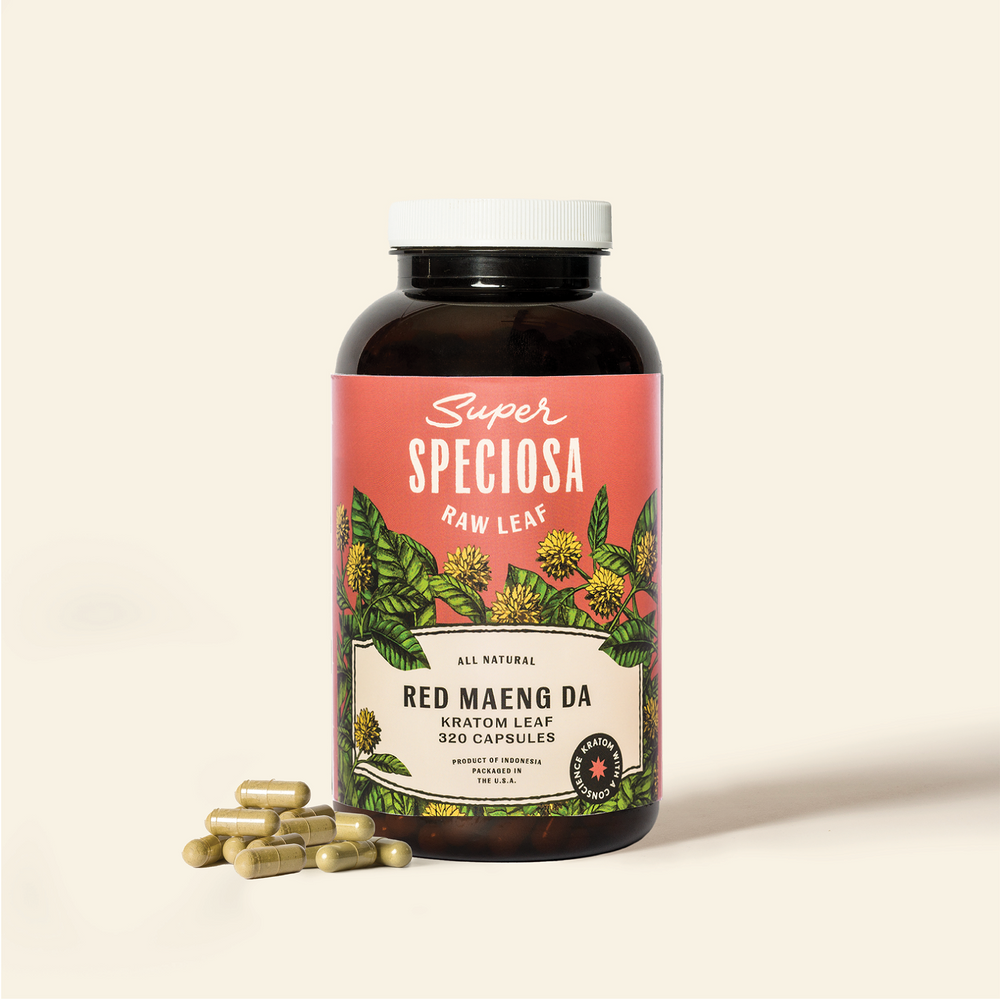
In fact, Henningfield said, there is a large amount of research available through the National Institute on Drug Abuse (NIDA), as well as a dosage study conducted by the FDA. One key part of that study is that the kratom used by the FDA came from Super Speciosa. According to Henningfield, the fact that the federal government could use high-quality products from an existing retailer shows that the key is responsible manufacturing–not limiting access to kratom.
Henningfield made it clear: Not only is there evidence that shows that natural leaf kratom is safe, but there is also a wide variety of studies and research that indicate the risks associated with 7-OH and other products pretending to be kratom.
“The vast majority of science is philanthropy science, mainly NIDA science,” Henningfield said. “When people say ‘we don’t know much about kratom’, we know a lot about kratom.”
Another key development discussed at the congressional briefing was the announcement of a study by the National Health Institute (NIH). The study is to be conducted in conjunction with the FDA and will evaluate the primary alkaloid in the kratom plant in a phase I clinical trial. Although the findings and expansion of kratom’s clinical profile are still years away, the announcement of the study is a significant step forward for the plant.
“The important takeaway from what was announced yesterday was a simple thing,” Haddow said. “They cannot undertake a human study without first verifying to an independent institutional review board that kratom is safe. They cannot put human subjects at unreasonable risk, and that is what we’re here today to discuss.”
All together, the congressional briefing made it clear that the prevailing science surrounding kratom indicates a clear difference between natural leaf kratom and the enhanced products that claim the same name.
From a scientific standpoint, the research indicates that natural leaf products are well-tolerated, even at increased dosages. As a matter of policy, regulations in favor of that natural profile can protect customers from synthesized products that present a uniquely different risk. All it takes is an approach from lawmakers to understand the difference between natural leaf kratom and those with 7-OH or other enhanced chemical profiles.
“Conflating those categories is not good science, and it’s not good policy,” Gupta said. “I think the simplistic goal in government, like a binary goal of ‘ban everything’ or ‘ban nothing’, is not going to work here. The goal should be to separate the botanical kratom from synthetic and highly concentrated products.”