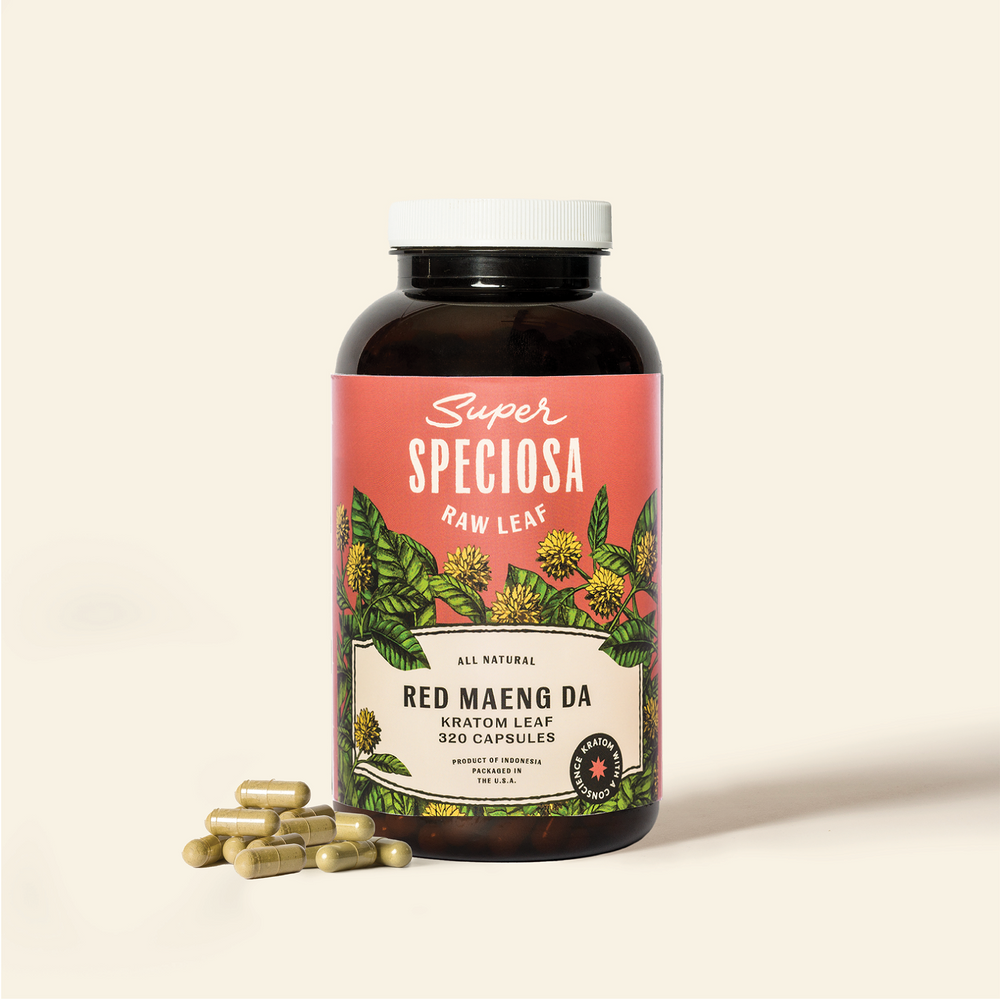
Super Speciosa Facilities Earn cGMP-Certification For Raw Kratom Leaf Production
SUPER SPECIOSA FACILITIES EARN CGMP-CERTIFICATION FOR RAW KRATOM LEAF PRODUCTION

As the kratom industry evolves, Super Speciosa’s commitment to quality and standards has remained unchanged–the most recent developments show why Super Speciosa is a brand that can be trusted by customers and regulators alike.
Super Speciosa has always adhered to the Food and Drug Administration (FDA) standards of Current Good Manufacturing Practices (cGMP); rather than accept the label of ‘compliant’, the company has taken the next steps toward manufacturing its products in a cGMP-certified facility. In an industry that has seen many bad actors and companies that use certain labels to create the illusion of safety and standards, Super Speciosa has taken steps to validate its commitment to quality and has set itself apart as a brand customers can trust.
And now it’s got the credentials to back that commitment.
Current kratom debates across the country continually come back to concerns about the safety and consistency of the products being sold. Regulations vary from state to state, with many still operating in legal gray areas with no regulation or oversight.
That means that customer safety is in the hands of kratom producers, and it leaves consumers in a tough situation. By adhering to the highest standards of cGMP certification, Super Speciosa is a brand that customers can trust to deliver consistent, high-quality products.
In simple terms, Super Speciosa has made the leap from simply adhering to cGMP practices and compliance measures to manufacturing its products in a cGMP-certified facility. That means that instead of just being subject to regular audits by the FDA, Super Speciosa has undergone rigorous third-party audits for its manufacturing facilities to achieve cGMP-certified status.
Per the guidelines laid out in the rules of the FDA’s cGMP standards, every company that produces dietary supplements is required to be an FDA-registered facility to adhere to legal requirements. There are also industry accolades, including a GMP qualification status from the American Kratom Association (AKA), that brands use in product marketing alongside other marks such as Certificates of Analysis (CoA).
Utilizing a facility that is cGMP certified is a step above industry labels, and represents an increased commitment to quality and standards. By taking those next steps, Super Speciosa is going above and beyond the simple step of being qualified by an organization such as the AKA to show customers that their products are reliable and consistent with the highest standards in the industry.
Becoming a brand that produces products in a cGMP-certified facility is a step above most other qualifications that you may find on the label of a kratom product. Rather than relying on flimsy standards that are not backed by third-party verification, the label of cGMP-certified is more than just a decorative claim–it’s a real, documented status that shows Super Speciosa adheres to standards that most of the market cannot match.
The Differences Between “Certified” and “Compliant”
The process of earning cGMP certification is a voluntary step that takes a next-level commitment to quality and following documented practices to prove to regulators and consumers. What sets cGMP certification apart from other badges of quality is the specific and thorough nature of the third-party audits required to achieve that status.
For example, cGMP certification calls for testing to verify the identity of each ingredient–not just simply relying on a CoA from a supplier. That means that a third-party auditor must verify those tests. Beyond the identity testing, brands must also define standards for purity, strength and the composition of finished batches, including contamination limits. All parts of the manufacturing process, from the procurement of ingredients to how batches are produced, fall under the rigorous standards of compliance.
Every batch of a product requires a complete, traceable record that aligns with a master manufacturing record to ensure that product standards are consistent in case of inspection or a product recall.
As the FDA has changed its position on natural leaf kratom vs. highly synthesized products masquerading as natural, the most common deficiency cited by the FDA has been a lack of standardized production. By operating out of a cGMP-certified facility, Super Speciosa has taken the steps to prove to its customers that its products fully adhere to the FDA’s guidelines to offer kratom consumers reliable, safe products.
Those standards are why the FDA turned to Super Speciosa when it conducted a dosage test for natural leaf kratom. During a Congressional briefing on kratom policy in June, Dr. Jack Henningfield highlighted that fact as part of his presentation. While some lawmakers and authorities have labeled kratom as an unsafe product, Henningfield made it clear: If companies are willing to adhere to cGMP standards and source quality material, then customers can be confident in the products they are purchasing.
What to Look For
The best way for customers to ensure they are getting a safe, effective kratom product is to learn what to look for when it comes to labeling and certifications. Rather than relying on vague badges and untested claims, customers should look for the following factors when evaluating any supplement brand:
-
Third-party lab testing that shows the alkaloid composition of a product and confirms the purity of ingredients and the absence of adulterants
-
Transparency about sourcing of raw materials, and a willingness to share CoA and certifications that back quality standards
-
Accurate labels that inform customers of exactly what they are getting in terms of dosage and ingredients