Red Kratom Strains Guide: Strains, Effects, & Types
RED KRATOM STRAINS GUIDE: STRAINS, EFFECTS, & TYPES

Walk into any conversation about kratom and red comes up first. Red vein products outsell every other color in the US market, and at Super Speciosa, red kratom strains like Red Maeng Da and Red Bali sit permanently among our most reordered products. Over 950 reviews on Red Maeng Da powder alone.
So what is it, actually?
Red kratom is kratom powder made from Mitragyna speciosa leaves that are dried in direct sunlight, which darkens the leaf and shifts its alkaloid profile toward the mellower character reds are known for. It's commonly associated with evening use, physical ease, and winding down rather than ramping up.
This guide covers how red kratom is made, what it's used for, every red strain worth knowing, and how to compare them by actual lab numbers instead of marketing copy.
What is red kratom?
Here's something most guides get wrong. The popular story says red kratom comes from "the most mature leaves" with red-colored veins, harvested at peak age. It's a tidy explanation, and it's mostly myth.
Red, green, and white kratom all come from the same trees. What separates them is what happens after harvest. Farmers crush the leaves and dry them using different techniques, and drying is where the color happens. Leaves dried outdoors in direct sunlight oxidize and darken, producing the deep reddish-brown powder sold as red kratom. Green kratom is dried indoors to keep its bright color. Kratom powder is never actually crimson; reds are simply the darkest end of kratom's green spectrum.
That extended sun exposure does more than change the shade. Oxidation shifts the leaf's alkaloid balance, the naturally occurring compounds like mitragynine that give each vein color its character. Red kratom's profile is why it earned its reputation as the wind-down color, which is exactly where the next section picks up.
One thing color can't tell you: potency. A red label says how the leaf was dried, not how strong the batch is. That's what lab testing is for, and it's why every Super Speciosa red ships with a QR code linked to its batch report. More on reading those numbers in the comparison section.
What is red kratom used for?
Red kratom's reputation is built around the end of the day, not the start of it. Where white strains get reached for in the morning and greens through the afternoon, reds are commonly associated with unwinding: easing into the evening, settling physical tension after work or a workout, and generally downshifting.
Serving size shapes the experience too. Across vein colors, smaller servings are generally associated with a lighter, more uplifting character, while larger servings lean further into the relaxing territory reds are known for. Individual factors like body weight and metabolism play their part, which is why the honest answer to "what will red kratom do for me" is always: start small and pay attention.
The most useful picture comes from people who take it. A few anecdotal reports from our customers:
"Red Maeng Da powder does the trick. It has a sedating effect yet perks me up as well, which seems contradictory but that's how it feels." - David
"Red Bali was delightful and relaxing... the effects were long-lasting and pleasant." - Crystal W.
"I find Red Borneo great to relax at the end of the day while being social around others." - Trevor M.
Notice the range inside those three quotes. An easy-does-it red with some lift left in it, a deep evening red, and a social-but-settled red. That's the point of the next section: "red kratom" isn't one experience, and picking the right strain is where the choice actually gets made.
Types of red kratom strains
Every red at Super Speciosa is a distinct leaf profile, tested batch by batch, with formats to match how you like to take it. Here's the full lineup, plus straight answers about the red strain names we don't carry.
Red Maeng Da kratom
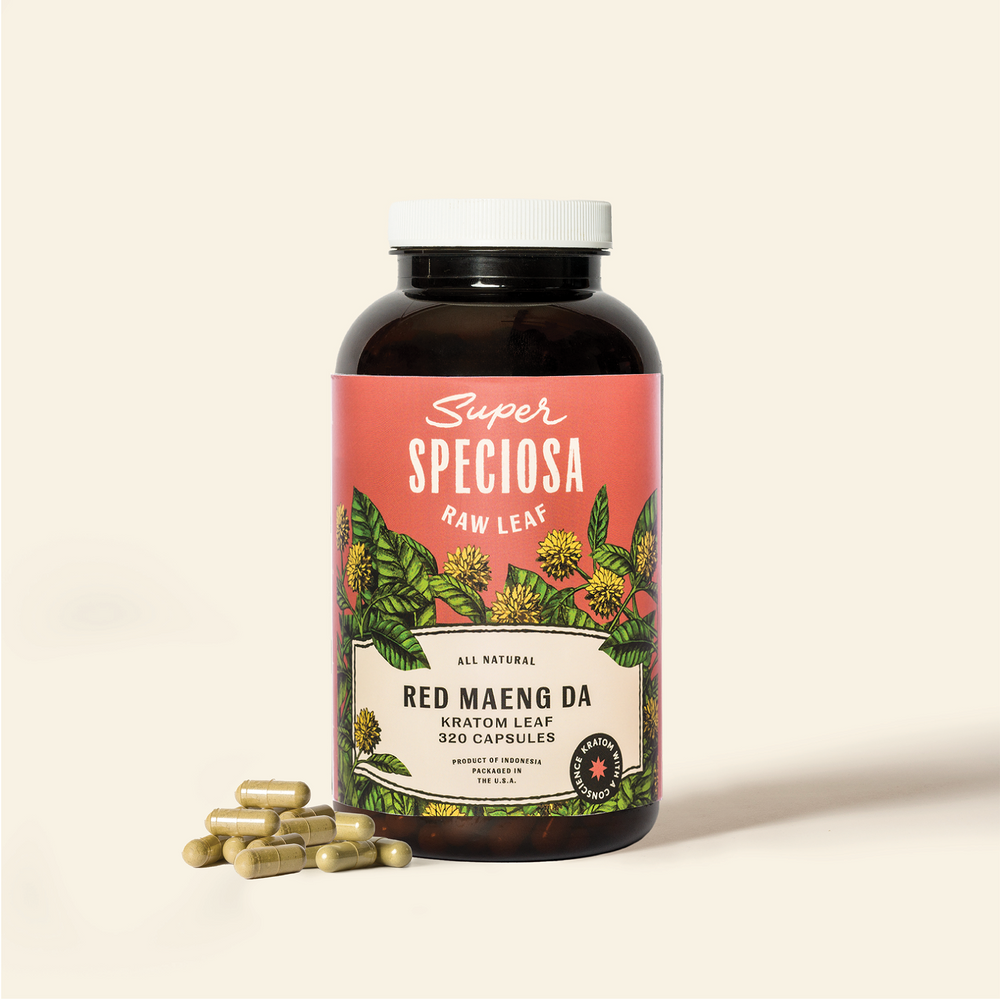
The workhorse red, and the one to start with if you want relaxation without full sedation. Maeng Da is our high-potency tier, guaranteed to test at 1.3% mitragynine or higher. David's "sedating yet perks me up" review captures its character: an easy-does-it red for afternoon and evening. Available as Red Maeng Da powder, Red Maeng Da capsules, and Red Maeng Da tablets, which currently hold the top spot among our red formats in customer reorders.
Red Bali kratom
The classic evening red, commonly associated with rest and recovery when the day is done. Softer character than Maeng Da, which makes it a frequent first red for newcomers. Choose from Red Bali powder, Red Bali capsules, or Red Bali tablets.
Red Borneo kratom
Named for the island where much of the world's kratom grows, Red Borneo sits in our 1.0% minimum mitragynine tier and has a reputation as the social red: settled but present, per Trevor's review above. Available as Red Borneo powder and Red Borneo capsules.
Super Red specialty kratom
Our specialty-grade red is our rare, 100% sun-dried kratom batch. Super Red capsules and Super Red powder come from select leaf with standout batch profiles; scan any bag's QR code and compare its numbers against a standard red.
What about Red Thai, Sumatra, Horn, and Malay?
You'll see these names across the market, and here's the honest version: strain names describe effect-profile traditions and marketing lineages more than verified botanical differences. Most commercial kratom, whatever the label, grows in Indonesia. A "Red Thai" from one vendor can test weaker than another vendor's Red Bali, because the name tells you nothing about alkaloid content.
That's why we'd rather hand you a smaller red lineup with guaranteed mitragynine minimums than a long menu of unverifiable names. If Red Horn's deep-evening reputation is what you're after, Red Bali covers that ground with a lab report to prove what's in the bag. Chasing the Red Thai/Malay middle ground? Red Maeng Da or Red Borneo get you there. And if you've seen Red Dragon around, our Red Dragon kratom explainer covers what that label really means.
Browse the complete red vein kratom collection to compare everything side by side.
How to compare red kratom strains
Strip away the strain names and lore, and comparing reds comes down to one number and one habit.
The number is mitragynine percentage. Kratom's primary alkaloid is measurable, and honest raw leaf tests between roughly 0.5% and 1.5%. That range is the real spread between a mild red and a strong one, and it's wider within a single strain name across vendors than most buyers realize. Two bags both labeled "Red Bali" can sit at opposite ends of it.
The habit is checking before you buy. This is where Super Speciosa's tier system replaces guesswork: our Maeng Da kratom reds are guaranteed at 1.3% mitragynine minimum, Borneo-tier reds at 1.0%, and every batch's exact number is public. Scan the QR code on any bag, or run the lot number through the lab lookup before the bag even arrives. The report shows the batch's mitragynine percentage next to its heavy metals and microbial screens.
So the practical comparison method looks like this. Decide how deep into relaxation territory you want to go, since that's what separates an afternoon-friendly red from a lights-out red. Pick the tier that matches: higher mitragynine for a more pronounced experience, standard tier for something gentler. Then confirm the batch report says what the tier promises. Thirty seconds, and you've done more due diligence than the average kratom buyer does in a year.
Color tells you the drying method. The lab report tells you everything else.
Red kratom vs other vein colors
The three main vein colors are the same leaf on different post-harvest paths, and each landed a different reputation.
White kratom is dried indoors with minimal light exposure, keeping the profile closest to fresh leaf. It's the morning color, commonly associated with energy and drive. Green kratom splits the difference: indoor-dried to preserve the bright hue, with a balanced character that works midday. Red takes the longest road through sunlight and oxidation, and carries the wind-down reputation this whole guide is about.
Choosing between red and green is the most common fork for new buyers, enough that we wrote a full red vs green kratom comparison breaking down how the two differ through a day. The short version: green for the daylight hours, red for after.
Plenty of customers keep both on the shelf and let the clock decide.
Forms of red kratom
Every red strain above comes in the format that fits your routine:
Red kratom powder is the traditional route: flexible serving sizes, brews into tea, and the best gram-for-gram value. Kratom capsules hold pre-measured 500mg servings with zero taste and maximum portability. Kratom tablets press 300mg servings into an even smaller on-the-go format. And red kratom tea bags turn the evening ritual into an actual ritual, crushed red leaf ready for hot water.
Whichever format you land on, you can buy kratom online with same-day shipping, batch-specific lab reports behind every QR code, and a 30-day satisfaction guarantee.
Frequently asked questions about red kratom
What is red kratom?
Red kratom is powder from Mitragyna speciosa leaves dried in direct sunlight, which oxidizes the leaf, darkens the powder, and shifts its alkaloid balance toward the mellower profile reds are known for. The color reflects the drying method, not a separate plant or leaf age.
What is red kratom used for?
Red strains are most commonly associated with evening use: relaxing after work, easing physical tension, and winding down before bed. Character varies by strain and serving size, with smaller servings generally described as lighter and larger servings leaning further into relaxation.
What is the strongest red kratom strain?
Strength is a lab number, not a strain name. Mitragynine percentage is what separates a mild red from a strong one, and it varies batch to batch. Super Speciosa's strongest guaranteed red tier is Red Maeng Da at 1.3% mitragynine minimum, with each batch's exact result published in its lab report.
Is red kratom good for beginners?
Red Bali is a frequent first red thanks to its softer, evening-friendly reputation, and capsules or tablets make first servings easy to measure. Whatever you choose, the standard advice applies: start with a small serving, follow the label, and give your body time to respond before taking more.
How is red kratom made?
Farmers harvest kratom leaves, crush them, and dry them outdoors in direct sunlight. The extended sun exposure oxidizes the leaf, deepening its color toward reddish-brown and developing the alkaloid profile that defines red vein products. The powder is then milled, and at Super Speciosa, tested by third-party labs before it's packaged with a batch-linked QR code.
These statements have not been evaluated by the Food and Drug Administration. This product is not intended to diagnose, treat, cure, or prevent any disease.
You must be 21 years of age or older to purchase kratom products. Kratom is not for use by pregnant or nursing women.
Kratom legality varies by state and locality. Check your local laws before purchasing, and see our state legality guide for current information.