How to Choose a Safe Kratom Vendor
HOW TO CHOOSE A SAFE KRATOM VENDOR

Every kratom product sold in the US reaches the shelf without any agency verifying what's inside it first. There's no pre-market approval, no mandatory testing, no inspector signing off on a batch before it ships. Whatever quality control exists is the quality control the vendor chose to build.
That single fact should shape how you shop. The strain names, the packaging, the price: all of it matters less than whether the company behind the product tests what it sells and shows you the results. Learning how to choose a safe kratom vendor really comes down to knowing which proof to ask for.
And the proof is easy to check once you know where to look. Trustworthy kratom brands document everything, because they have nothing to hide.
Quick answer: how to choose a safe kratom vendor
Before you buy kratom online or in a store, look for a brand that can show you:
- A third-party lab report for the exact batch in your hands, not a generic certificate
- Verified alkaloid content, with the mitragynine percentage stated plainly
- Where the product is manufactured, and who actually makes it
- Testing from accredited laboratories you can independently verify
- Honest labels: lot numbers, serving information, and zero medical claims
- A real company behind the product, with an address, support team, and return policy
Every check on that list takes a few minutes at most. The rest of this guide walks through each one, using Super Speciosa's lab lookup tool and packaging as a working example of what full transparency looks like.
What makes a kratom vendor safe to buy from
Kratom occupies an unusual spot in US commerce. The FDA has not approved it as a dietary supplement, so the pre-market safety review that applies to most products in the supplement aisle never happens for kratom. Raw leaf arrives from Indonesia in bulk, and what happens next depends entirely on the company handling it.
Here's the part most buyers never hear: roughly 15 to 25% of raw kratom entering the US fails microbial testing standards on arrival. Salmonella, E. coli, mold. That's not a reason to panic, it's a reason to care about process. Contaminated leaf is a normal, manageable reality of importing an agricultural product, and a serious manufacturer catches it through testing and pasteurization before it ever becomes a finished product. A careless one packages it and ships it.
The difference between those two companies is invisible from the front of a bag. Both will print "premium" on the label. Both will claim quality.
So the question isn't which kratom brands say the right things. It's which ones can prove them. The six checks below are that proof, and a safe vendor passes all of them without hesitation.
Six signs of a safe kratom vendor
1. Batch-specific lab reports you can pull up yourself
"Lab tested" printed on a bag means nothing by itself. Anyone can print it. What matters is whether you can see the actual report for the actual batch you're holding, tested by a lab the vendor doesn't own.
Every Super Speciosa package carries a QR code that opens the third-party lab report for that specific lot: alkaloid content, heavy metals, microbial results. No QR code handy? Type the lot number from any bag into the lab lookup tool and the same report comes up. A generic certificate from eight months ago doesn't tell you anything about the bag in your hand. A lot-matched report does.
2. Verified alkaloid content, not just strain names
Strain names are marketing shorthand. Mitragynine content is measurable fact, and it's the difference between knowing what you bought and hoping.
This is where safe kratom brands separate from the pack most visibly. Super Speciosa is the only vendor that organizes its catalog around lab-verified mitragynine minimums: Maeng Da kratom is guaranteed to test at 1.3% mitragynine or higher, Borneo strains at 1.0%, and Signature Reserve at 1.5%. Batches that miss the number don't ship under that label. For context, honest raw leaf tests between roughly 0.5% and 1.5% mitragynine, so treat any brand advertising dramatically higher numbers for plain powder with suspicion. Fraudulent lab reports claiming 2.5% have circulated online.
3. In-house manufacturing in the US
Ask a simple question: who actually makes this product? Many kratom brands are marketing operations that buy powder from whoever's cheapest, bag it, and ship it. When something goes wrong, nobody in that chain owns the problem.
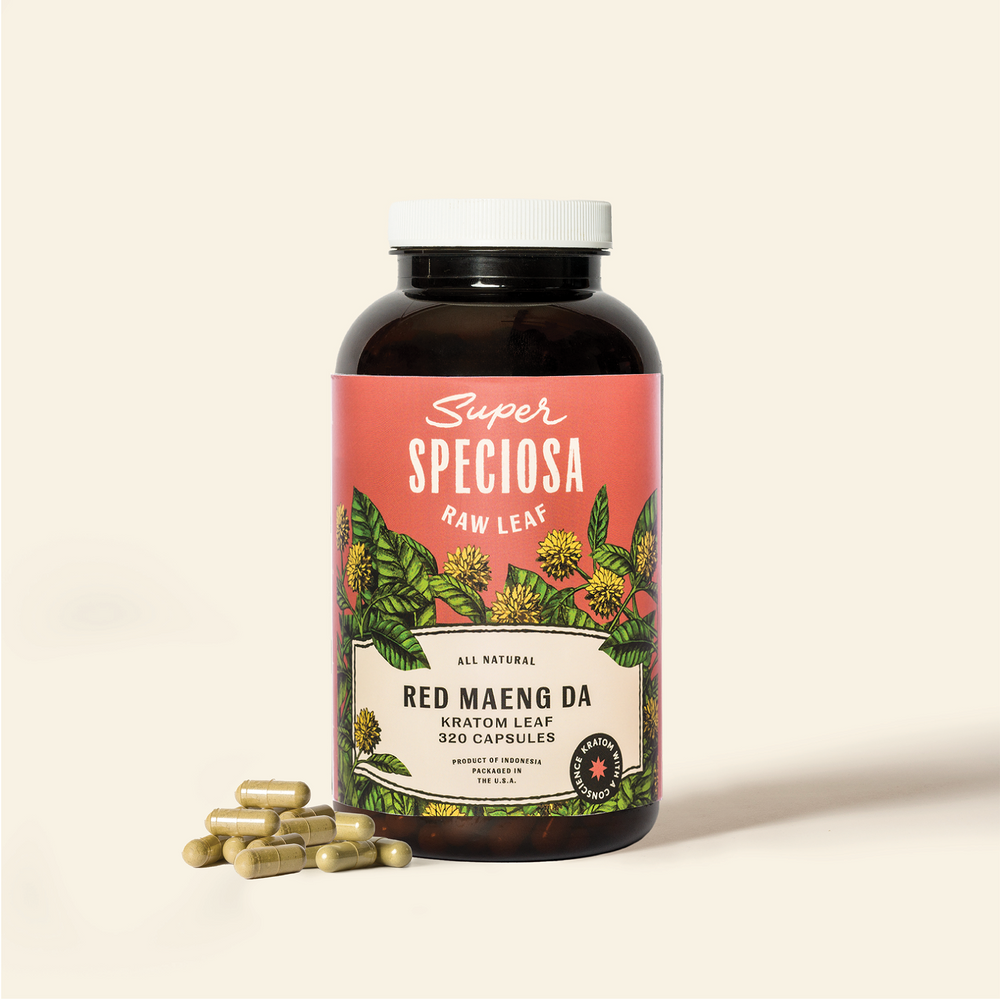
Super Speciosa manufactures everything in its own Fort Lauderdale, Florida headquarters, an FDA-registered, cGMP-certified facility following current Good Manufacturing Practices for dietary supplements. Raw leaf gets tested when it arrives, monitored during production, and tested again as a finished product. No overseas contract packers, no mystery middlemen. One team, one building, full accountability from leaf to label.
4. Accredited labs, verifiable independently
A lab report is only as good as the lab behind it. Legitimate testing labs hold ISO 17025 accreditation, the international standard for testing competence, and accreditation records are public.
Super Speciosa's heavy metals testing, for example, runs through Cora Science, an ISO 17025 accredited laboratory whose status anyone can confirm through PJLA, the accreditation body. That's the level of paper trail to expect. If a vendor's certificate comes from a lab you can't find, with no letterhead, no address, and no accreditation to check, the document is decoration.
5. Honest labels and honest marketing
US law doesn't allow kratom vendors to claim their products treat, cure, or prevent anything. Brands that make those claims anyway are telling you how they operate everywhere else too.
Look for the boring stuff instead: a lot number, a net weight, serving information, an ingredient list with nothing hiding in it. Super Speciosa's transparency standards keep formulas deliberately plain. No artificial dyes, no fillers, nothing synthetic. The label describes the product, the lab report backs the label, and the marketing stays inside the lines.
6. A real company that answers when you call
Safe kratom vendors exist at a physical address with people in it. Check for a company history, working contact channels, and a return policy written in plain language.
Super Speciosa has operated from Fort Lauderdale since 2016, with a customer support team you can actually reach and a 30-day satisfaction guarantee on every order. More than 100,000 customers and 8,000+ published reviews later, the track record is easy to audit. Compare that with a vendor whose entire footprint is a checkout page and a Gmail address.
Red flags when comparing kratom brands
The checks above tell you who to trust. These tell you when to stop reading and close the tab.
No lab reports anywhere. If a brand claims testing but publishes nothing, or offers a single undated PDF for its entire catalog, assume the testing doesn't exist in any form that protects you.
Medical claims. Any kratom product promising to treat pain, anxiety, addiction, or anything else is breaking FDA rules in public. A company that ignores the rules you can see is ignoring the ones you can't.
No potency information. A bag with no mitragynine content, no lot number, and no serving details isn't a mysterious bargain. It's a vendor that either doesn't know what's in its product or doesn't want you to.
Prices that don't add up. Third-party testing, accredited labs, and controlled manufacturing all cost real money. A kilo priced like a sandwich is skipping at least one of them.
Anonymous operations. No address, no names, no history, domain registered last spring. If you can't find who's behind a brand before buying, imagine reaching them about a problem after.
Impulse-buy retail. Kratom sold next to energy shots at a register deserves extra scrutiny, since convenience stores rarely vet suppliers and staff can't answer basic questions. If that's your only option, at least look up the brand first. Our guide to gas station kratom covers exactly what to check before grabbing anything off a counter rack.
One red flag is a reason to dig deeper. Two is a reason to buy elsewhere.
How to verify a kratom lab report in five minutes
Reading a lab report sounds technical. It isn't. Here's the whole process, using a Super Speciosa bag as the example since every package is built for this.
Step 1: Pull up the report
Scan the QR code on the bag, or enter the lot number printed on the label into the kratom lab lookup tool. Either way you should land on results for that exact batch, not a company-wide certificate.
Step 2: Match the lot number
The number on the report and the number on your bag should be identical. This is the single fastest way to catch recycled or decorative paperwork, and it takes ten seconds.
Step 3: Read the mitragynine line
The report states alkaloid content as a percentage. Check it against what the product promised. A Super Speciosa Maeng Da batch, for instance, will show 1.3% mitragynine or higher, because batches below that threshold never ship under the Maeng Da label. Plain leaf powder from any honest vendor lands somewhere between 0.5% and 1.5%.
Step 4: Scan the safety panels
Look for heavy metals (lead, arsenic, cadmium, mercury) and microbial results (salmonella, E. coli, yeast, mold) marked as passing or within limits. A report that only shows alkaloid content did half the job.
Step 5: Check who ran the test
The report should carry the lab's name, address, and contact details. Search the lab's accreditation. ISO 17025 status takes one search to confirm through accreditation bodies like PJLA.
Five steps, five minutes, and you know more about that product than most buyers ever learn about theirs. Do it once with any vendor you're considering. The ones worth your money make it easy.
Why kratom buyers choose Super Speciosa
Everything this guide told you to demand from a vendor is standard practice here, and has been since 2016.
Every batch is tested by independent, accredited labs and published where anyone can read it. Alkaloid content is guaranteed by tier, so a strain name on our shelf means a verified mitragynine number, not a vibe. Production happens in one Fort Lauderdale building our own team runs, in an FDA-registered facility following current Good Manufacturing Practices. And when the FDA selected products for its first clinical study on kratom, ours were the ones used, a study that examined different serving sizes and reported no serious adverse effects.
The catalog covers whatever format fits your routine: kratom powder for flexibility, kratom capsules for convenience, plus tablets, tea bags, gummies, and extract shots. Not sure where to start? The best sellers collection is where 100,000+ customers have already voted, backed by more than 8,000 published reviews and a 30-day satisfaction guarantee.
You now know exactly what to verify before trusting any kratom brand. Buy kratom from a vendor that was built to pass every check, and scan the QR code when your order arrives. We put it there so you would.
Frequently asked questions about safe kratom vendors
How do I know if a kratom brand is safe?
Run the six checks in this guide: batch-specific third-party lab reports, verified mitragynine content, known manufacturing location, accredited labs, honest labels, and a reachable company with real policies. A brand that passes all six has documented its quality at every step. A brand that fails two or more isn't worth the gamble, no matter the price.
What should a kratom lab report include?
A complete report covers alkaloid content (the mitragynine percentage), heavy metals (lead, arsenic, cadmium, mercury), and microbial screening (salmonella, E. coli, yeast, mold), all tied to a specific lot number that matches the package. It should also name the lab, including its address and accreditation. Alkaloid-only reports are incomplete.
Are gas station kratom brands safe?
Some are legitimate, but the setting removes your ability to tell. Convenience retailers rarely vet suppliers, and products can sit on racks well past freshness. If you're buying in person, research the specific brand first and stick to retailers listed in a vendor's own kratom store directory rather than grabbing an unfamiliar label at a register.
What does cGMP mean for kratom vendors?
Current Good Manufacturing Practices are the FDA's manufacturing standards for dietary supplements, covering facility controls, testing procedures, documentation, and labeling accuracy. A kratom vendor following these practices in an FDA-registered facility is applying the same quality framework required across the supplement industry, which matters for a product with no pre-market review of its own.
Does the FDA regulate kratom?
Not the way it regulates approved supplements or drugs. Kratom has no FDA approval, so no agency verifies products before sale. That's exactly why vendor-level proof (published lab reports, verified potency, controlled manufacturing) carries all the weight, and why choosing carefully matters more with kratom than with most things you buy.
These statements have not been evaluated by the Food and Drug Administration. This product is not intended to diagnose, treat, cure, or prevent any disease.
You must be 21 years of age or older to purchase kratom products. Kratom is not for use by pregnant or nursing women.
Kratom legality varies by state and locality. Check your local laws before purchasing, and see our state legality guide for current information.